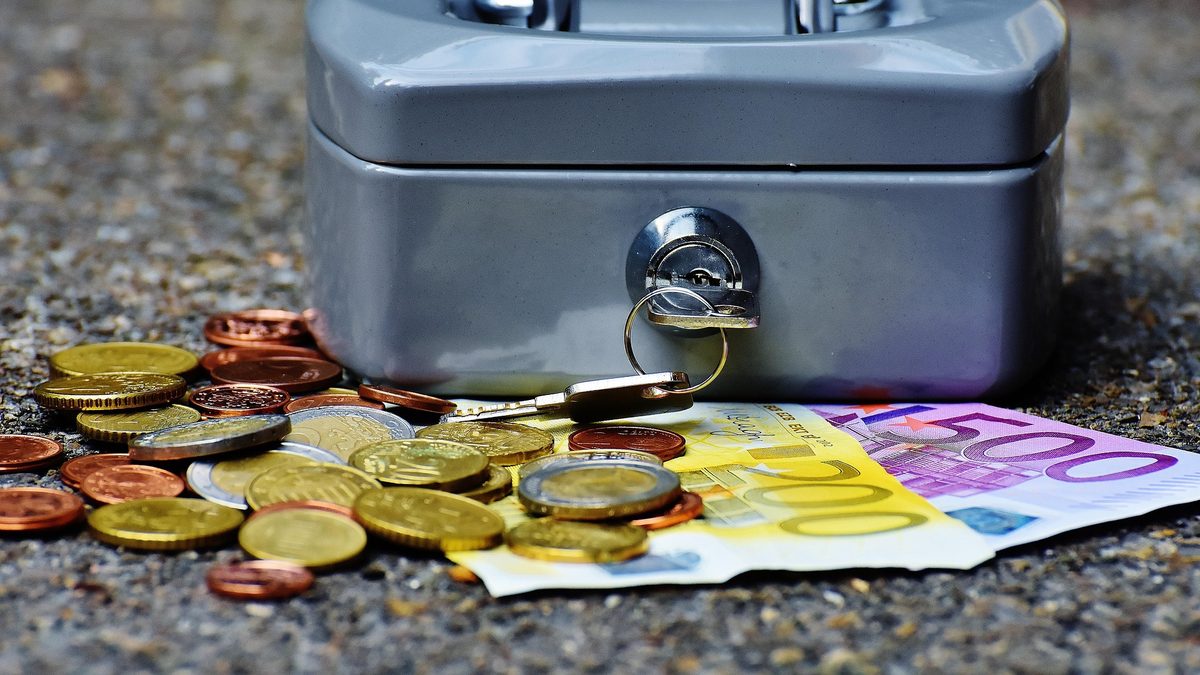
Once you've decided to start an emergency fund, a practical question comes up fast: where does this money actually go? Not the strategy, just the physical (or digital) place. Here's the short version, followed by the full breakdown.
The Short Answer
For most beginners, the best place to start is a savings account at a different bank than your everyday checking account — ideally one with no monthly fees and a decent interest rate. If that sounds like a lot, don't worry: we'll walk through exactly why, and what to do if you can't set that up right away.
Option 1: Your Regular Checking Account
This is where most beginners start, often without deciding to — it's just where the money already is.
- Pros: Instantly accessible, no setup required, you already have it.
- Cons: Too easy to accidentally spend. Checking accounts also typically pay little to no interest, so your money doesn't grow at all sitting there.
Verdict: fine for a day or two while you're figuring things out, but not a good long-term home for your emergency fund. The biggest risk isn't the account itself — it's that "emergency fund" money that lives in your everyday spending account tends to quietly become regular spending money.
Option 2: A Regular Savings Account
A basic savings account, often at the same bank as your checking account, is a step up.
- Pros: Separate from your everyday spending, usually easy to open in minutes, still accessible when you actually need it.
- Cons: Because it's often at the same bank, moving money "just this once" is only a couple of taps away — less of a barrier than you might want. Interest rates at traditional big banks also tend to be very low.
Verdict: a real improvement over checking, and a completely reasonable place to start if opening an account elsewhere feels like too much right now. See Savings Accounts 101 for the basics of how these accounts work.
Option 3: A High-Yield Savings Account (HYSA)
A high-yield savings account works exactly like a regular savings account, but typically pays a meaningfully higher interest rate, and is usually offered by an online-only bank rather than a traditional branch bank.
- Pros: Your money actually earns something noticeable while it sits there. Being at a separate, often app-only bank adds a small but useful barrier between your everyday spending and your emergency fund — you can't tap it from the same app you use to buy coffee.
- Cons: Takes a bit more effort to set up initially (usually 10–15 minutes online), and transfers between banks can take one to a few business days rather than being instant.
Verdict: this is usually the best long-term home for an emergency fund. Read What Is a High-Yield Savings Account? for a full explanation of how these work and how to pick one.
Option 4: Cash at Home
Some beginners consider keeping emergency cash physically at home. It's worth addressing honestly rather than dismissing it.
- Pros: No bank needed, instantly accessible, no dependence on technology or internet access.
- Cons: No interest at all, risk of loss or theft, no protection if something happens to it, and no paper trail.
Verdict: not recommended as your main emergency fund, though keeping a very small amount of cash (enough for a true "no card, no power, no internet" scenario) alongside a bank-based fund is a reasonable personal choice for some people.
Is Your Money Safe There?
A common worry for beginners: "what if something happens to the bank?" For accounts at banks insured by the FDIC (Federal Deposit Insurance Corporation), or credit unions insured by the NCUA (National Credit Union Administration), your deposits are protected up to a set limit per depositor, per institution, even if the bank fails.
For a beginner's emergency fund, which is almost always well under that limit, the practical takeaway is simple: as long as you're using an FDIC-insured bank or NCUA-insured credit union (nearly all well-known banks and credit unions are), your money is protected. Look for the FDIC or NCUA logo on a bank's website, or check directly on the FDIC's BankFind tool, before opening an account you're unsure about.
Why "Out of Sight" Matters More Than You'd Think
One detail beginners often underestimate: keeping your emergency fund at a different bank than your everyday spending account isn't just about interest rates. It's about friction. When your savings aren't visible every time you check your main balance, you're far less likely to dip into them for non-emergencies. That small bit of inconvenience — needing to log into a separate app and wait a day or two for a transfer — is a feature, not a bug.
Our Recommendation for Beginners
If you're deciding where to start today:
- If opening a new account feels overwhelming right now, use a savings account at your current bank to get started this week.
- Once you're comfortable, open a high-yield savings account at a separate online bank and move your emergency fund there.
- Set up automatic transfers into that account so the money moves before you have a chance to reconsider.
Getting started matters more than getting it perfect. A $500 emergency fund sitting in a plain savings account is far more useful than a "perfect" high-yield account you never got around to opening.
Quick-start checklist
- I've chosen where my emergency fund will live (checking is not the answer)
- I've opened a savings account, or scheduled time this week to open one
- I understand a high-yield savings account is the strongest long-term option
- I've set up (or plan to set up) automatic transfers into this account
- I've read What Is a High-Yield Savings Account? if I'm considering one